
Been thinking about Political Correctness and the use of the word “Pussy”, and thought of #ClintEastwood. And you know what, the word could be used more. My turn (five mental jumping jacks, and go):
America’s #Pussies should just Get Over #ColinKaepernick’s free speech. People are offended by that, but not racist or sexist speech? Quit being a Pussy – this is part of living in a Free Society, as guaranteed by our amazing Constitution. Be an American, and stand up for others’ right to express things you disagree with, in a manner they choose fit. Be proud that our society permits and one would think embraces that free expression.
If there is such a thing as Reverse- #PoliticalCorrectness (like Reverse Discrimination), this could be what it looks like: demanding nothing less than ostentatious displays of “Patriotism”
#🇺🇸

Author Archives: Jason
IOS update for deplorables
Many Trump supporters do have #deplorable *attitudes steeped homo/xeno-phobia and racism.
I suspect there is a direct correlation with the fact that many (or at least significantly greater percentages when compared to those supporting HRC) are white and have never left their hometowns.
It’s much easier to be a homophobic racist when your life experience does not involve exposure to different/minority cultures, norms, lifestyles, and when you haven’t learned to develop empathy and the ability to see different points of view.
One could argue, that in a globalized, digital, age, such Long Island insularity is no excuse.
But then again, it’s like that annoying IOS update reminder.
Those who cling to their deplorable attitudes are likely the ones who consistently press “later”, refuse to update, and complain about having to change how they think.
http://www.dailydot.com/layer8/anderson-cooper-homophobic-attacks-twitter/



Fast Riders, Strong Leaders?
Of course Putin appears to be a “stronger” leader. He presides over an authoritarian regime, and doesn’t have to deal with an oppositional Duma, free press allowed to criticize the Kremlin, and constitutional checks and balances.
Put me on a horse and Victor Espinoza on a donkey, and I’m going to appear to be the faster rider.
You could agree with some superficial assessments, but to take it at face value, for the typical FB troll, is silly. For the Candidate himself to hold such #SelfDelusions, reflecting a lack of understanding of the constitutional democracy he seeks to lead, its frightening.
http://www.politico.com/blogs/2016-presidential-debate-fact-check/2016/10/yes-pence-trump-have-called-putin-a-stronger-leader-than-obama-229155
****
One of the things they used to tell us at the Marine Corps’ Basic School, was “if you can lead your peers, then you can lead Marines.”
The implication was, that at Basic Officers Course, with all lieutenants – getting your peers to work together to accomplish the mission, peers you held no actual authority over – then the *real Marine Corps with enlisted Marines who by oath would be bound to follow your orders would be a piece of cake.
http://www.marines.com/m/being-a-marine/leadership-principles
China Safari
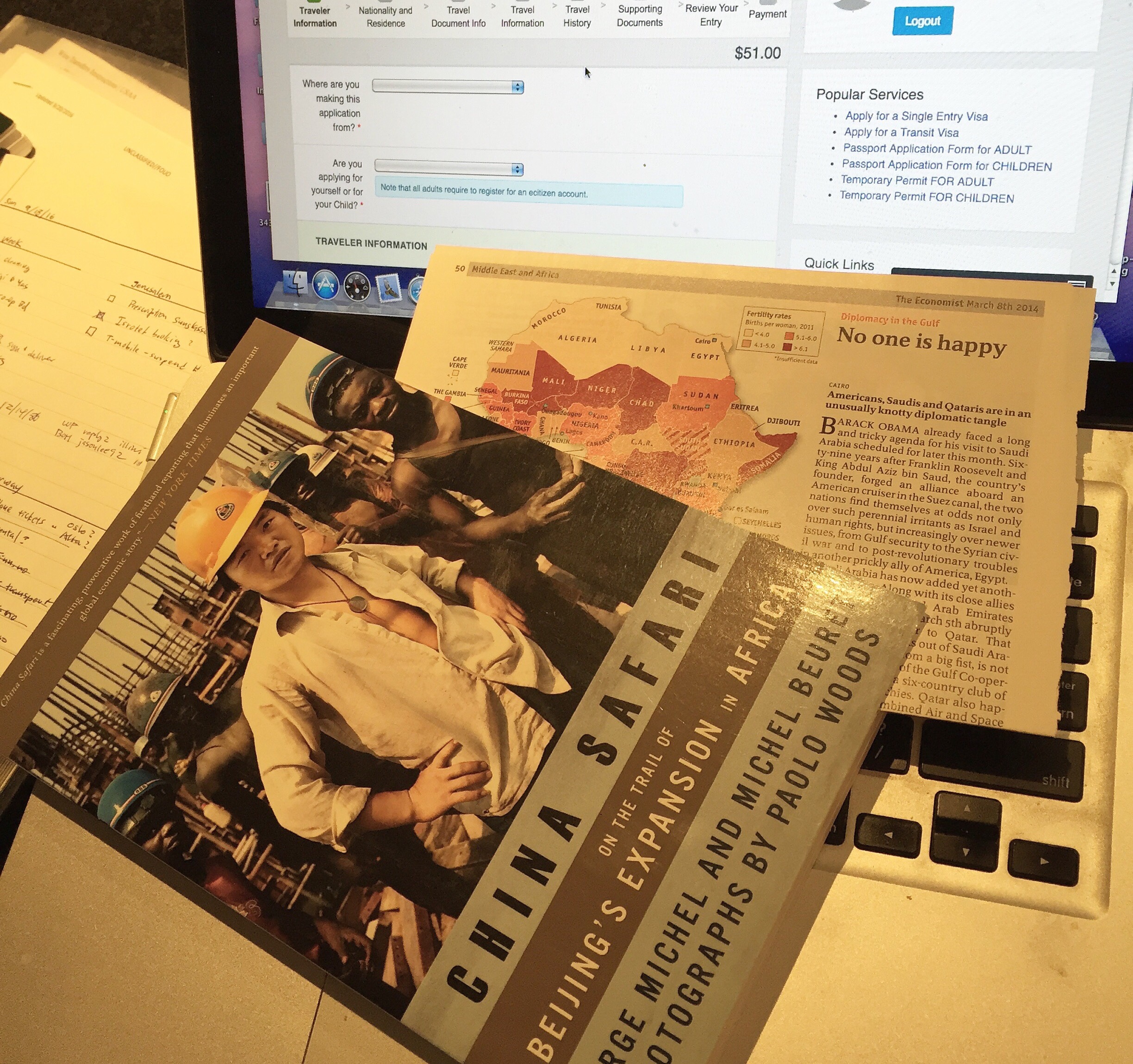
I’m in Morocco last November, and as I approach the terminal after getting off a prop plane, I see a greeting delegation holding a sign for a Sino-Africa Joint Investment conference with an arrow pointing a “VIP” area.
Later as I clear customs the immigration officers stops me – after already inspecting and stamping my passport, and me halfway past him into the baggage claim area. He wants to know, “where are you from?”
Well, he just inspected my US passport, so I figure he means New York city? “No, where are you from?” he repeats.
Oh, I get it. So I try, “My parents are from Taiwan.”
Confused look. Maybe he is thinking “Thailand?”
“I am Chinese,” I surrender.
The immigration officer gives me a look of recognition – a “I knew that” look – breaks out a large smile, and sends me the one step through with a cheery “welcome!”
I decide right then, that in case of any unrest in northern Africa, and if I have to make my way to an American embassy, I will be Chinese until I get through a Post One and by a US Marine.
China is aggressively investing and expanding its presence in Africa. And you can bet that internationalism is part of a China First foreign policy.
“Foreign aid” isn’t based on state-sponsored altruism. It’s purpose is to secure influence over parties to a post-War global order, largely shaped by the United States (that China wants to challenge/US wants to maintain) that promotes American interests, but sure as hell sounds more warm and fuzzy than naked colonialism.
Once America chooses to become “America First” (ver. Trump), others will step in. Want to secure beautiful trade deals that benefit American companies seeking international opportunities? Get in line.
https://www.washingtonpost.com/world/national-security/75-retired-senior-diplomats-sign-letter-opposing-trump-for-president/2016/09/21/5c5dff10-8046-11e6-b002-307601806392_story.html
The Trump campaign responded on Thursday that the country needs “an America First foreign policy.”
“How terribly weak and ineffective for a bunch of career overseas bureaucrats to send a letter or cable saying they want to keep things exactly as they are now and that they’re rallying around fellow insider Hillary Clinton,” the statement said. “The world has become a more dangerous place on their watch and they need to step up and own it.”
Ripple Effects / re:HONY

Re: #HONY (1/3)
Things you don’t tell your 10-year old niece about your time in the US Marines:
1. When 2/3’s battalion commander and sergeant major got blown up, along with the Fox Company commander, a captain; and in the rear at MCBH, you get sent with the CACO to talk to the captain’s widow about legal affairs. And the newer judge advocate with you, he starts going over the guardianship issues, and who the primary guardian is, and who they want to appoint as the secondary guardian, and the the widow breaks down and cries out “Am I supposed to presume everyone might die!?” Being a Lawyer and being a Legal Counsel are two very different things. One, you only need a law degree. The other demands more, more of which is not taught in school.
2. Everybody is invincible until the first person you personally know dies. People deal with it differently. I told myself after Eddie Lopez died in Iraq, that I would *never be surprised again. So when I was sitting on the tarmac on a California airbase, on a chartered jet with our battalion, to go to Afghanistan, I remember looking around, at the Marines on the plane, and reminding myself – chances are, somebody on this plane is not coming back. Turns out 19 Marines and Sailors did not come back. Doc Qi was amongst those who died in shitty Taghaz (where I froze my ass off and placed heated plastic water bottles at the bottom of my sleeping bag at night to help warm my extremities) when a suicide bomber with a vest full of ball-bearings took blew himself and Marines/Doc up. Sergeant Major Cottle’s LAV (driven by LCpl Centanni) rolled over an improvised explosive device. Despite the morbid mental exercises you might run through pre-deployment, you still don’t forget those days post-deployment.
Re: #HONY (2/3)
3. There is a huge ripple effect that people don’t see in the stats that measure KIA – the emotional trauma. Cpl Ross. Pvt Marshall … all coping differently, and really, in very, very, sad ways. Talking to the Haditha Marine sent collect photos of the civilian casualties, telling you his nightmares and how he can’t sleep, he keeps seeing the moment when he picked up the dead girl’s body, and how when he lifted her body up into his armd her brains spilled out of her head and onto his boot. And when he cries to you about how he wrecked his car at Camp Pendleton, you are thinking “brother, your car should be the last of your worries.” And you hope the Marine is not suicidal. Running into Sgt Smith’s parents at Arlington, who are also watching over Doc Qi’s grave one row up, and them relaying to you that Doc’s parents haven’t even told his grandparents that Doc passed away out of fear it would literally break their hearts – as parents who have lost a child, to have to hide that from their own parents, and to grieve on their own.
4. You don’t talk about being angry at the civilian-military divide, and the time it takes to learn to cope with the sense that people really don’t understand, and maybe don’t even care, and to let it go, and to channel the negative emotions into helping other veterans who do understand. On the flip side, you learn to not be embarrassed talking about things out of concern people will feel uncomfortable or think you have PTSD.
Re: #HONY (3/3)
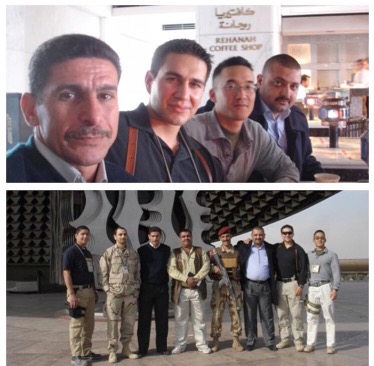
5. You don’t talk about your Iraqi partners showing a video of Iraqis who worked with the Coalition being executed in line by shots to the back of the head, and saying they showed you to remind you that when US forces leave, this is what they will still be facing in Iraq. “We will still be here after you leave.” And when you are traveling through Iraq with your Iraqi partner, and on US military bases, they are technically not allowed onto the DFAC’s and PXes, you learn to say Fuck That Shit, and just march them in like they belong, past the contracted guards (pulling some rank), so they can buy crap loads of American candy to take home their daughters from the PX after whizzing from Baghdad to Diyala to Ramadi with you. And the sense of guilt knowing they are right – that US forces will eventually leave some day, and what will happen to them. (Though nobody foresaw it would be ISIS). America can fail, and Americans will forget. The places the American Empire has left its footprint, the locals will continue to feel the consequences after we are long gone.
Rule of Law and Justice Problems

Re: #HONY (1/2)
Rule of Law and Justice problems:
Afghanistan 2009 – Khan Neshin, Rigg District, Helmand Province – the southernmost Area of Operations (AO) for Marine forces, 60 km from the Pakistan border and widely used Taliban narco-financing route.
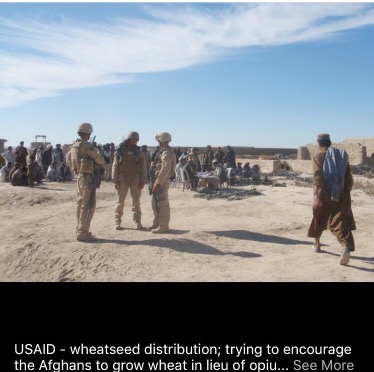
Afghan legal code makes the possession and use of narcotics illegal. But far from Kabul, villages organized around tribal systems, have not seen any form of government or outsiders for so long that they ask Marines on in a July 2009 offensive to clear the Taliban presence, “Are you Russian?” The Taliban encourage the villagers to grow poppy (which they then traffic across the border), which the villagers gladly do because poppy grows naturally in the region, and they get paid more than growing food crops. By all local and cultural norms, and with the Taliban as a de facto shadow government, poppy-growing is a way of life.
A growing frustration exists from the difficulty of capturing Taliban members with accompanying evidence of, e.g., planting IEDs, murder, and other terrorism-associated charges, combined with the inability to have them prosecuted in the Afghan government’s ineffective and corrupt formal judicial system.
Narcotics, being so prevalent, becomes the quickest way to get the “bad guys” – if getting Al Capone on tax evasion is what you got, that’s what you do. You get them not as anti-government “insurgents” on terrorism-charges, but as drug traffikers.
During non-growing season, many villagers also keep a “brick” of unprocessed opium as a piggy bank – with no banking system, a volatile currency, and a barter-economy, they keep it as currency for a rainy day.
The wife of one detained opium farmer found with a brick complains to the District Governor – who will now feed their family if they take away her husband? And if not opium, what? And what when the Taliban come demanding the opium? Can the Kabul not only protect the villagers but also provide the resources to change the entire local economy from poppy-based to alternate, licit, crops?
Re: #HONY (2/2) The thought is floated for selective detentions – i.e., intelligence provides the identity of Taliban members known to have planted IEDs, etc., and then capture only those members on drug charges, but leave the villagers alone.
But can you have that double standard? How legitimate is a law that is not applied uniformly? Will it only lead to allegations of corruption (and actual corruption)? What do you do, with the Marines frustrations of capturing Taliban members, only to have to release them days later? What do you do to stay vigilant over the possibility that the frustrations will lead to essentially, vigilante justice?
How do you continue to work with different elements of your own battalion staff, some more “intelligence”-driven and tactically focused, than the larger strategic “rule of law” mission?
Pressure to find a solution that accommodates various goals that creates competing interests, priorities, demands, from within, from above, from around … IDEAS are easy.
Execution, in the real world, with second/third-order effects, with the law of unintended consequences, is difficult.
re: Humans of NY
Re: #HONY (1/4) – I know a lot of Marines who served in Iraq in 2007, in Al Anbar Province, when the “Sunni Awakening” helped turn back the Al Qaeda-Iraq (AQI) led insurgency, subsequent to which American politicians touted the success of the “surge” (but the Marines knew better). I also know a lot of Marines who served in Afghanistan in 2009, in Helmand Province – then a Taliban stronghold and hotbed of insurgency against Hamid Karzai’s Coalition-backed Government of Afghanistan (GoA). By 2010, Helmand was considered largely secure. Subsequent troop withdrawals saw Ramadi, a key city in Al Anbar, fall to ISIS in 2014, and as recent as last week, reports were coming out of Lashkar Gah that the Taliban was close to retaking Helmand’s provincial capital.
I hear a lot of Marines – those of whom gave, completely, chunks of their lives to far away places called Al Anbar and Helmand – lament: “All that for nothing.” But I tend not to think that “all that” was for nothing @humansofny

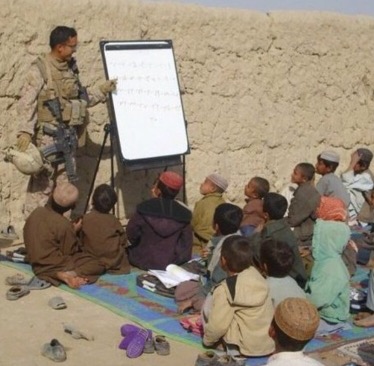
Re: #HONY (2/4) – There was never any guarantee, following 2007 in Al Anbar, or 2009/2010 in Helmand, that either Iraq or Afghanistan would become stable Western-style democracies in the years following. Politics mattered. Culture mattered. History mattered – none of which Marines had control over. Stabilization Operations are fundamentally about setting conditions for more permanent change – to secure follow-on international aid, for local governance to operate, to set up schools and create infrastructure. We were there to give those subsequent requirements for permanent change a chance.

Re: #HONY (3/4) – People always ask, “Was it worth it?” – particularly those who know my past (and continued) skepticism of the likelihood of “success” in our endeavors in Iraq and Afghanistan.
But in spite of that skepticism, it was worth it, in at least two ways:
1. If your actions are guided by your values, then regardless of the outcome, what you do is “worth it” – in the sense that you’ve lived a life consistent with those values. (Is there really another way?) 2. More in-line with #WillStacey’s point – in 2010 when we were in Afghanistan, a local villager brought his young daughter to our outpost. She had 3rd-degree burns covering much of her body from a (non-military related) accident, and he pleaded for our help. Our battalion surgeon was able to provide effective, if rudimentary care, and saved the little girl’s life. To that father, it was worth it. To that little girl, it was worth it. To the Marines in the combat outpost, far away from their own families that day, I am sure it was worth it.
My skepticism about the end-result of the Iraq/Afghanistan Wars, in broader terms of whether it achieves our nation’s National Security Strategy is irrelevant in this context – If I wore a different hat, my feelings might be different, because then I might have to consider things like, how every $ spent fighting wars overseas, is one $ less on important domestic social programs. But I presume people are asking me, was it worth it, as a Marine (not an ordinary, voting, citizen), going to Iraq/Afghanistan.
So if you asked me, as a Marine, “was it worth it?” – I would say:
It was worth it when you personally believe that those of us who enjoy the privileges of a common citizenship, should also be willing to undertake the burden of shared sacrifice – regardless of politics.
It was worth it to see the relief and joy in a father’s eyes, and the lessening of suffering in those of his child’s.
It was worth it to be in the company of young men who believed, not only that there is purpose in life greater than the satisfaction of our own appetites, but chose to act on it. @humansofny
Re: #HONY (4/4) – The the US military executes the orders given to it by a democratically elected civilian leadership, and does it with the resources that leadership appropriates to it.
The question of “is it worth it”, in a more broadly relevant context, then, should be one that is not asked as frequently of veterans, than it is one that should be asked more frequently of civilians.
Is it worth it, for example, to be disengaged, apathetic, removed from our political process – one that produced the leadership responsible for 10 years of war laid upon the shoulders of less than 2% of the American citizenry, and billion of dollars not spent on our own infrastructure, education, and people?
It was worth it to me as a Marine.
Was it worth it to you as a citizen?
Computer Games and Life
I’ve been re-playing missions in this computer game where I lead piloted robots in combat against other robots. This girl I’ve been seeing finds it all a bit ridiculous. I’ve already beat all the missions, she says!
I tell her in response that that’s true, but I replay the missions to see how I could have accomplished them differently – say, with a different combination of robots, or armed with different weapons, or utilizing different strategies to take advantage of terrain. In short, how can I complete the missions *better, and set myself up for even greater success in future missions (when you suffer less damage in previous missions, you have a better chance of succeeding in future missions, etc).
It all actually reminds me of volunteer work I’ve done with kids who would be the first in their families to attend college.
So much of “success” in life is beyond genetics, it’s also situational. If you have parents or older siblings who have been to college, you have someone to tell you how to go about it, without having to research and figure out everything on your own. That gives you a head start. That head start lets you focus on other things, and those things continue to add up to give you better and better opportunities to succeed. It’s about knowing what to do, how to do, and how to do it better. In life, as opposed to computer games where you blow up robots, you only get one chance. Having mentors, family or otherwise, to guide you, makes a difference. When you have only one chance, and have to figure things out as you go rather than just focusing on learning the actual subject material etc – those are real, if intangible challenges that the luckier ones don’t have to face.
Tangentially, it also makes me thing how important it is, in a family, that the parents get along – for their kids. Compare it to a company – any office politics distracts from the energy and attention that could be going toward making a great product. Compare it to national corruption and economic output – studies have shown that countries with high corruption have lower economic growth. Corruption has the effect of an implied tax that lowers productivity. All the energy a couple spends fighting each other is energy that isn’t available to devote elsewhere. Then maybe kids may get neglected more, tired parents let the nannies or teachers at school handle “it.”
Thankfully, the girl tolerates my computer gaming with good humour … so far.
That, and the fact that I am not taller than her when she wears heels, that I don’t have a job in private equity, that I am not an “alpha male”, etc. etc. (all things very important to many NYC women who are “not here for a hookup”)
Land of the Free, Home of the Brave
 My parents came to the United States from Taiwan in the 70s to pursue better opportunities in life. But in the 80s, when the so-called “Five Asian Tigers” experienced an economic boom led by their export-driven economies – which then spurred political liberalization due to a growing middle class – my parents moved back.
I remember returning to Taiwan as a child, and my mother taking me to the movie theaters. Taiwan technically remained a martial law country until 1986. Until then, at the movie theaters, they would play the Taiwan national anthem before the movie – very martial, F-16 jet fighters screaming across the screen – and, the audience *had to stand.
I remember having to be told by my mom to stand and – not fidget. There might be police watching, she said. It’s unfathomable to me to imagine that in the United States, you would go to an AMC Theater to watch Frozen, and prior to the screening, the theater would play the Stars Spangled Banner, and the entire audience would be *required to stand at attention, with the notion that the police “might be watching.”
I celebrate that Colin Kaepernick has the choice to sit.
I celebrate that Colin Kaepernick can choose to sit during the national anthem, to protest injustices he sees (degrees to which we may disagree on, yes), because he believes that our society has fallen short of America’s best ideals.
In one act (or non-act), Colin Kaepernick draws attention to both how we as a nation might have failed ourselves, while demonstrating in other regards, where we as a Nation are indeed the land of the Free, and the home of the Brave.
Empowerment (non-Kardashian alternative)
Emails from mom:

#Repost – Emails from Mom. And what “#empowerment” means to me:
“When I was in 4th grade, I came home one day and saw posted on the gates outside a foreclosure notice. When I went inside, the notices were also posted in the yard, on the house’s door, even on our piano inside. Dad was not home, and Mom sat there looking lost. I went over to her and cried holding her. (I only knew something was wrong and cried out of fright). I didn’t go to school for a while, following Mom in and out of the house, and learned that … the banks had further limited our daily bank withdrawals…. Before I was born, your uncles and auntie had very tough lives, they never wore new clothes, everything was used, with no distinction for gender. Grandmother’s family [was better off and] helped out a little. I often used the excuse of seeing Grandmother’s family to go over and eat apples and oranges. Grandfather’s career was devoted to politics. He never lost an election, but … his focus was on getting elected and constituents – a lot of responsibility fell upon Grandmother to take care of family matters, political pr, business. When I grew up, I didn’t want to marry a politician or businessman, but to have a peaceful life. But I also didn’t want to have too many hardships. When I married a professor, I hoped that Grandfather might help us financially. Grandfather helped by giving us the money to help build the house. Sadly, he passed away before it was completed, and Grandmother became mindless after Grandfather died.
I am grateful I was born in the right family, but I also regret not having contributed to society.” Sent from my iPhone
January 11, 2016
*****
April 8, 2016
My mom once lamented the fact that, at all the dinner gatherings, the husbands sat at the men’s table, and the wives sat at the women’s table. The husbands talked about politics, business, and world events. The wives passed gossip. Mom found the women’s table incredibly boring – she yearned to sit with the men, and learn about the politics, business, and affairs of the world.
I know that if I ever have a daughter, I want her to grow up able to sit at any table she wants to. I want her to have the equality of opportunities from childhood, to be able to forge her own path without being subject to stereotypes and prejudice, and to grow up to become an adult who is treated as an equal at any table.
Some women may gain empowerment by advertising their boobs. That’s fine. But I believe that the best path for any daughter of mine will come by fighting to remove institutional barriers to women’s equality, combined with educating the individual mind. And that a better measure of #empowerment isn’t the amount of attention one attracts, but how much (after balancing enjoying the world with improving the world) one has left to give.
*****

“#JKRowling recognises the gnawing pain and dispirited nature of poverty….
‘I remember 20 years ago not eating so my daughter would eat. I remember nights when there was literally no money. I would have done anything to work and I took as much work as I could…. I am now able to #give….
In her 20s, she worked for Amnesty International and Christian Aid. Maybe there is a bit of her DNA which is wired to fight injustice. ‘I have this quotation by #EBWhite on the wall in the room where I write,’ says Rowling. ‘It says, “I arise in the morning torn between a desire to improve the world and a desire to enjoy the world. This makes it hard to plan the day.”
http://www.dailymail.co.uk/home/event/article-2474863/JK-Rowling-I-poor-possible-be.html
 you hate mosquitoes too